
About Honey Bees
Honey bees (Apis genus) are eusocial insects, meaning they live in highly organised colonies with distinct roles. For over 9,000 years, the western honey bee (Apis mellifera), has been domesticated for honey production and crop pollination. Colonies are often described as a superorganism, a living system where thousands of individual bees act together as one. Each bee has a specialised role: the queen lays eggs, workers forage and care for brood, and drones mate. The colony’s survival depends on this collective behaviour, with decisions made through cooperation rather than individual choice.
Life in the Hive
A honey bee colony is like a busy city with tens of thousands of bees working together. A typical honey bee colony contains:
- One queen: She lays all the eggs (brood) and produces pheromones that guide colony behaviour.
- Worker Bees: These sterile female bees do almost everything; they clean, feed young bees, build comb, collect water, nectar and pollen, and guard the entrance.
- Drones: These are male bees whose sole purpose is to mate with a queen.
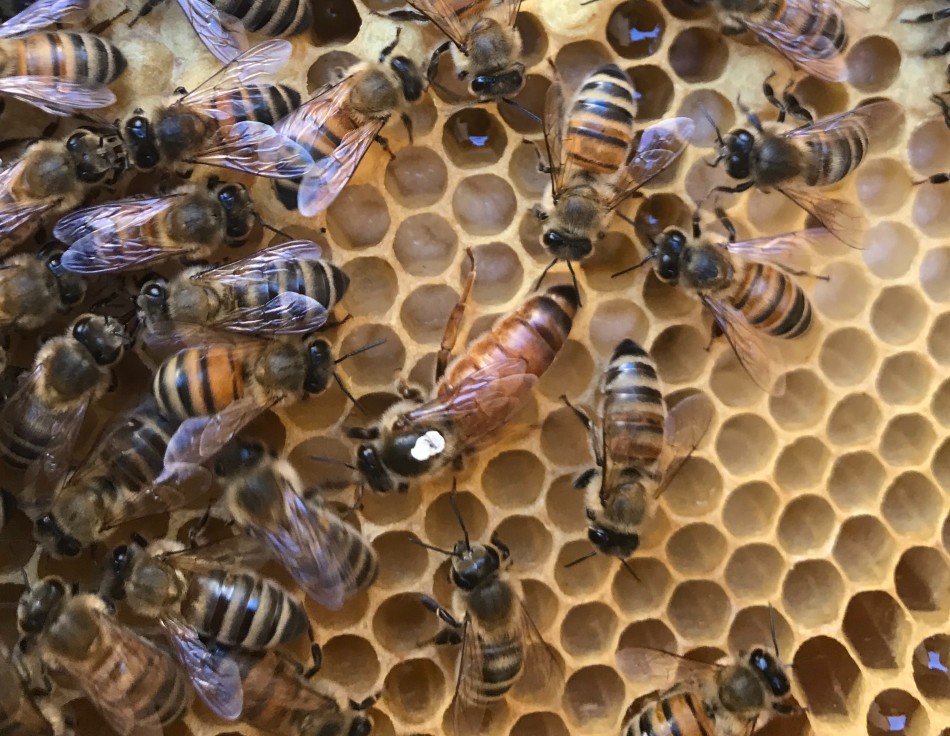
Within the hive, bees build comb where they store honey, pollen, and eggs. The comb is a complex structure made of beeswax, which bees secrete from their abdomen glands. This wax is shaped into hexagonal cells, providing efficient storage and insulation for honey and pollen or ‘bee bread’, essential to rearing young bees.
Communication - Pheromones, dancing and touch
Bees communicate with each other through several methods: pheromones, dances, antennae touching (antennation), vibrational signals and food exchanges (trophallaxis). These allow bees to share information about food, danger, brood needs and the queen’s condition, keeping the colony functioning as a coordinated whole or superorganism.
Pheromones, chemical signals inside the hive
Honey bees use pheromones as their main communication system. These are chemical signals that act like a shared language and spread quickly through the hive. They shape how bees behave and maintain order within the hive.
- Queen pheromones keep the colony stable and signal that the queen is healthy.
- Brood pheromones tell workers when larvae need feeding and help balance foraging and nursing
- Nasonov pheromone helps bees orient and gather, especially during swarming
- Alarm pheromones warn the colony of threats and trigger defence
Communication through dance
Honey bees communicate with movement through a unique and sophisticated dance language that lets foragers share information about sources of nectar, pollen, water or propolis. These movements are performed on the comb inside the hive, where other bees sense them through touch, vibration and airflow rather than sight.
- Round dance - A forager circles left and right in quick loops to signal that food is very close to the hive. This encourages nestmates to search the nearby area without giving a precise direction.
- Waggle dance - A figure‑of‑eight pattern with a central “waggle run.” The angle of the waggle run shows the direction of the food relative to the sun, and the duration of the waggle indicates distance. The energy of the dance reflects how rewarding the food source is.
- Shaking signals - Short, vigorous vibrations used to stimulate other workers, often encouraging more foragers to leave the hive when resources are abundant.
- Tremble dance - A slower, vibrating movement that signals congestion inside the hive, prompting more bees to help process nectar rather than collect more.
Close‑contact communication
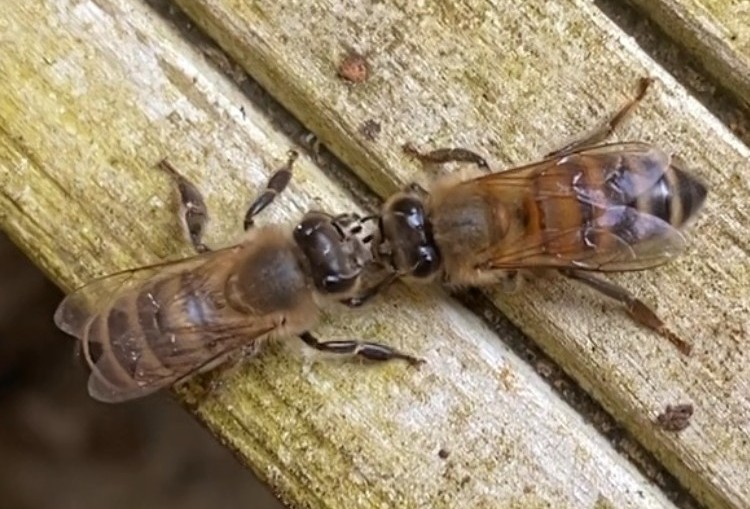
Honey bees use antennation and trophallaxis as touch‑based communication methods. Antennation—brief touches with the antennae—allows bees to gather information through scent and vibration. Through these quick contacts, they recognise nestmates, assess the quality of food brought in by foragers, check the queen’s condition, and stimulate or calm one another to regulate activity levels.
Trophallaxis, the mouth‑to‑mouth sharing of nectar or other liquids, spreads both nutrition and chemical signals. As bees exchange food, they also pass along pheromones from the queen and brood and share cues about the quality of forage outside the hive. These two behaviours create a constant flow of touch and chemical signals, helping the colony stay synchronised and responsive.
Why Honey Bees Swarm
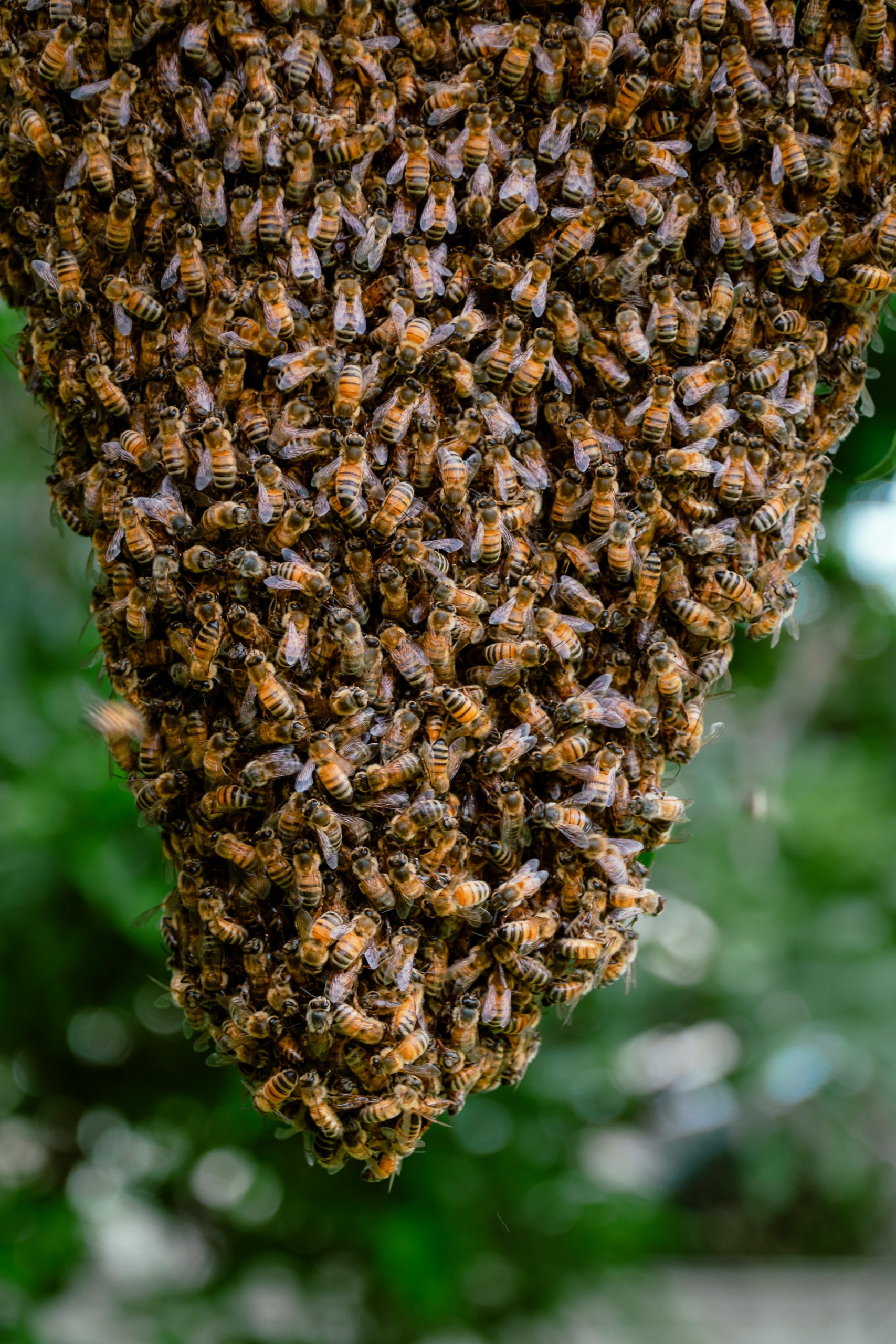
Swarming is one of the most remarkable behaviours in honey bee biology, representing the colony’s natural method of reproduction. As spring progresses and the colony grows, the hive can become crowded with bees, brood, and stored nectar. This congestion triggers the workers to begin raising new queens. Once queen cells are developing, the old queen prepares to leave by slimming down so she can fly again. When the time is right, she departs with thousands of workers, often more than half the colony, to establish a new nest site. The remaining bees stay behind to rear the new queen, who will take over the original hive.
A swarm in flight can look dramatic and frightening, with a cloud of bees swirling through the air, but the bees are usually calm and focused on protecting the queen rather than defending themselves. After a short flight, the swarm clusters temporarily on a branch, fence, or other surface while scout bees search for a suitable new home. During this stage the bees are typically docile and unlikely to sting, but it’s still important to keep a safe distance. If you encounter a swarm, go indoors, close windows and doors, and allow the bees to settle. Once they have formed a cluster, a beekeeper can safely collect and relocate them to a new hive.
Why Bees make Honey (and other useful things!)
Honey bees are unique among bees in producing large, sustainable stores of honey, enough not only to feed their own colony but enough to be harvested by humans. This abundance is rooted in their biology and their year‑round colony life cycle. Unlike most other bees and wasps, honey bees do not hibernate (diapause). Instead, they remain active through winter, forming a tight cluster to keep warm. Maintaining this cluster requires a constant supply of energy, so the colony must store substantial amounts of food during spring and summer. Nectar gathered from flowers is transformed into honey, a stable, long‑lasting carbohydrate source that can sustain tens of thousands of bees through cold months when forage is unavailable.
In addition to honey, honey bees create several other valuable substances that support colony health and function. Beeswax, secreted from glands on the worker bee’s abdomen, is the purest and most natural of all waxes and forms the structure of the comb where bees store food and raise brood. Propolis, often called bee glue, is a resinous material collected from tree buds and sap; bees use it to seal gaps, strengthen the hive, and inhibit microbial growth. Royal jelly, a nutrient‑rich secretion produced by nurse bees, is fed to all young larvae for their first few days and exclusively to larvae destined to become queens.